
JODIE BARR

Whim | 0 to 1 e-commerce app
Designing for trust in a two-sided marketplace.
how do you make buyers feel safe purchasing from sellers they've never heard of?
How I approached this
This was my first independent project. I want to be transparent about what informed the work and what didn't
Direct CEO collaboration
Weekly working sessions where the founder articulated business goals (expand seller reach, signal honesty, support influencer driven discovery. I translated this into product structure. The CEO entrusted me with design direction. I owned the process and experience.
Heuristic personas and competitive landscape
Without an existing user base to recruit from, I built user personas (Silvia, the cautious shopper & Victor, the seller looking for signals). These profiles were built on patterns from comparable marketplaces and my own experiences. These were tools for decision making.
No primary user research or usability testing
Honest constraint of a 2 month, single designer engagement. I'll add what I would've added at the end.
If had the opportunity with a less time constraints, I'd start with 6-8 buyer interviews and 3-4 seller interviews before touching wireframe. The framing below would likely survive that research. Specific features and decisions may have evolved or changed according to research findings.
Reframing the Problem
Stakeholders described Whim as a marketplace problem. I argued that it was actually a trust problem within
the marketplace. This reframed what the app needed to do.
A Marketplace Problem says:
help buyers find products and helper sellers list them.
Solution Direction:
Search, Categories, Listing
VS.
A Trust Problem says:
give buyers reasons to believe what sellers claim + give sellers signals about what to change.
Solution Direction:
Social proof, transparent feedback, seller-buyer dialogue
Same screens, but each approach emphasizes different things
3 questions will frame the solution
How might we build trust and a pleasant experience for online shoppers?
How might we help sellers reach more potential buyers?
How might we reduce risk for both sides of the transaction?
User Personas
- Unsure whether or not sellers are being honest about product quality and expectations
THE BUYER
- Unsure whether or not sellers are being honest about product quality and expectations
Silvia loves shopping online but doesn't always find pleasure in the process or the outcome. Most of her time is spent combing through product reviews and even then sometimes what she receives doesn't meet her expectations.
THE SELLER
Victor has amazing products for sale...or so he thinks. For some reason sales have been declining and he's not sure if he should focus on improving inventory or marketing.
Goals
- To expand reach to more potential buyers
- To better understand what consumers are expecting and if their needs are being met
- To be able to promote inventory

Needs
- Purchase goods confidently
- Receive honest information on vendors and products
Pain Points
- It is difficult to assess the quality of products when you can't physically see or feel them
Goals
- To make well informed decisions when making purchases
- To discover reliable brands and vendors to buy products from.

Needs
- To reach more potential buyers
- To better understand his store's product trends
- To understand what consumers are expecting when they buy a product.
Pain Points
- As a seller it can be hard to decipher what factors are affecting sales
- Reaching the target audience can be hard especially for newer store owners.
People who like shop online often spend a lot of time sifting through store and product reviews in an attempt to lower the risk involved when making a purchase. Bad experiences while shopping online happens often. This can be a result of poor product descriptions, lack of reviews and bad communication. This also affects the buyer and translates into a decrease in revenue. `A successful app will restore trust in the user and provide transparency between buyers and sellers.
QUESTIONS
There are a few questions that need to be answered in order to solve the user's problems. In this case it includes the following:
1.How might we build trust and create a pleasant experience for online shoppers?
2. How might we help sellers reach more potential buyer's?
3. How might we decrease risk for both the buyer and the seller?
How Might We?

PROPOSAL
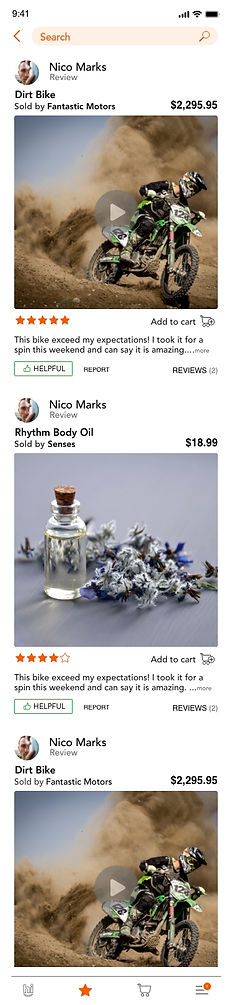
Stakeholders wanted to include opportunities for influencers to play a role in the marketplace. I thought that a good way to build upon that idea would be to include a market "feed". The feature would have patterns reminiscent of Instagram or TikTok culture. The goal would be to design a feature that encourages users to scroll and discover items. This would create a more enjoyable experience for buyers. Consumers would see content and posts similar to previous purchases and interactions and indulge in an experience similar to window shopping.
Buyers also have the opportunity to follow their favorite stores and brands which would allow them to see more content from them and their influencers. These capabilities helps the seller by providing opportunities to connect with buyers through content versus blatant advertising and the buyer by providing both content and reviews to increase confident decision making.
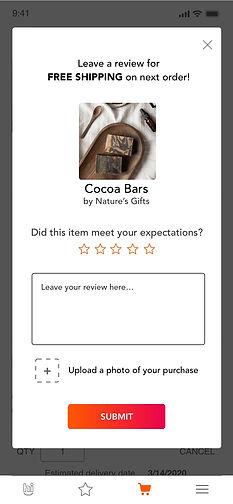
Encouraging transparency can be done by allowing consumer to interact with each other. Through gamification we can encourage users to leave reviews and to respond to questions or comments from others. Sellers have a motive to sell a product while buyers do not. This gives potential buyers an opportunity to feel a bit more secure in a potential buy.
Proposed Features
- Product discovery feed
- Influencer and brand content opportunities
- Consumer to consumer communication
- Opportunities to tailor feed
WIREFRAMES

FINAL PRODUCT



Translating Stakeholder Asks
The founders wanted influencers to play a role in the marketplace. I wanted this ask to mesh seamlessly into the experience and avoid it feeling forced.
Instead of an "Influencer page", I used it to bridge the gap between a deeper need.Buyers want signals from real people and people they trust, not algorithms or sellers.
That led me to explore a content-first discovery feed,
this would simultaneously serve influencers sellers, and buyers with 1 feature.
This persists throughout the experience. Every screen tries to signal trust (reviews, content, social proof, conversations) to help replace the in-person assessment that users cannot do when making purchases online.